
Devorah’s Emergence into Self-Ownership
Unorthodox: The Scandalous Rejection of My Hasidic RootsThis thread traces Devorah’s movement from a watchful child who discovers the power of concealment to an adult who claims authorship of her life and leaves with her son.
increasing Bearing strength in each event
 decreasing
Bearing strength in each eventdecreasingA Child in the Kitchen
A Child in the Kitchen
Seeking a place to belong
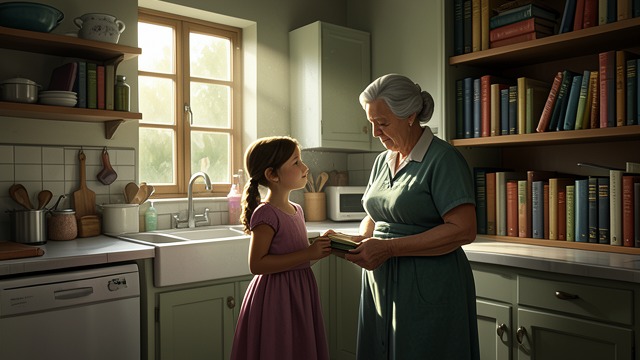
Devorah grows up between a father who cannot reliably care for her, a mother who has left, and grandparents whose household is governed by strict religious expectations. She gravitates toward Bubby’s kitchen, where food, familiar routines, and her grandmother’s quiet presence offer a rare sense of safety.
That shelter is incomplete. Zeidy values obedience and spiritual discipline, while Chaya monitors Devorah’s behavior and treats her questions as problems to correct. Devorah learns early that being accepted often means performing the version of herself other people expect.
A private inner life
Books become an imagined route beyond Williamsburg. Devorah sneaks into the public library, reads stories about children who escape constrained lives, and secretly buys an English translation of the Talmud, seeking knowledge withheld from girls.
Her reading does not immediately give her a way out, but it teaches her to compare what she is told with what she discovers. An inward life takes shape beneath her outward compliance, preparing her to question the authority that has defined her childhood.
Learning to Perform
Learning to Perform
A secret power
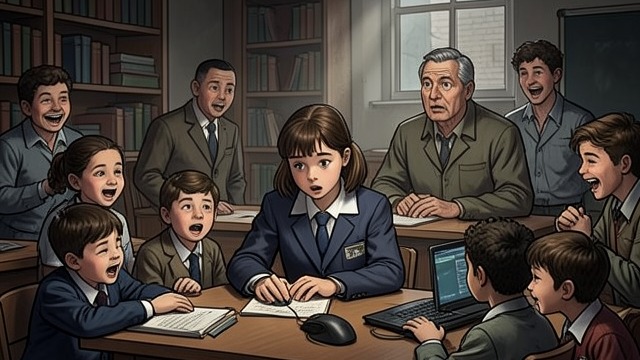
When Devorah invents a mouse sighting to disrupt a tedious lesson, she discovers that a convincing performance can alter how other people behave. The prank earns her a small victory over a school environment in which she is usually watched, corrected, and treated as a disciplinary problem.
She begins to understand that the mask of a good girl can be useful. By appearing meek and compliant, she can protect the thoughts and reading that would otherwise expose her to punishment.
A tool with a cost
The ability to conceal herself gives Devorah room to explore, but it also sharpens the divide between her public manner and private convictions. She becomes practiced at anticipating what authority figures want to see, even as her own judgment grows less dependent on their approval.
This skill will serve her during later stages of her life, when open refusal carries greater risks. Yet her childhood performance is not freedom itself: it is a survival strategy developed because she has not been permitted to choose openly.
A Future Chosen for Her
A Future Chosen for Her
The match takes shape
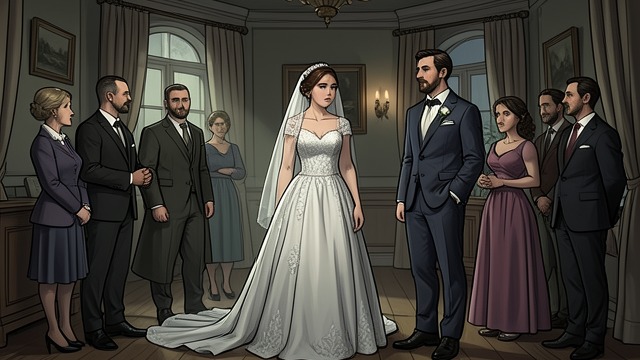
As Devorah approaches adulthood, her family arranges her marriage to Eli. She is presented with carefully selected clothes, jewelry, and a prospective husband, while decisions about her future are made through family discussions and religious custom.
She tries to read the arrangement as a possible route to independence. Eli’s assurances that he can handle her let her hope that marriage might offer both companionship and room to remain herself, even though she has little real power to refuse.
Consent under pressure
At their meeting, Devorah asks questions and tries to assess Eli’s character, but the process is already moving toward engagement. When she gives the expected nod, it feels less like a decisive choice than the only available response in a room with no alternative door.
Her hopes reveal both her resourcefulness and her vulnerability. She enters marriage imagining that a new household might loosen the constraints of her old one, without yet knowing how strongly the same expectations will follow her into it.
Motherhood and the Open Door
Motherhood and the Open Door
A difficult beginning
Devorah’s first year of marriage is marked by painful, unsuccessful attempts at intercourse, medical uncertainty, and pressure from Eli’s family. Her body becomes a site of public scrutiny, and the effort to meet expectations deepens her anxiety and estrangement from herself.
After treatment for vaginismus, she and Eli finally consummate the marriage. Pregnancy follows, but the experience does not resolve the deeper questions of intimacy, privacy, or control that have unsettled their relationship.
A child changes the stakes
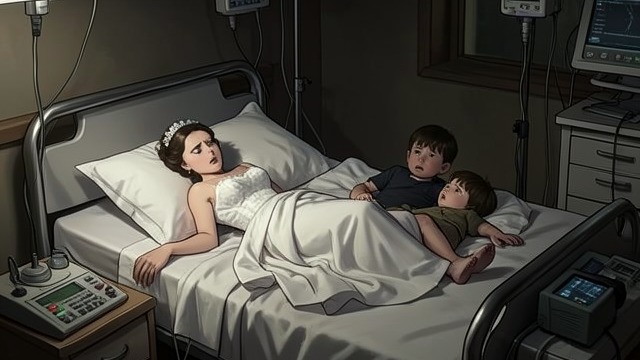
When Yitzy is born, Devorah initially feels detached rather than instinctively maternal. She nevertheless cares for him and gradually recognizes that the future being assigned to him matters as much as the one imposed on her.
The possibility of his entering the same narrow educational and religious system makes her doubts urgent. Motherhood does not instantly free her, but it turns private dissatisfaction into a responsibility she can no longer postpone.
Leaving and Reclaiming Her Story
Leaving and Reclaiming Her Story
The break becomes possible
By 2009, Devorah is studying at Sarah Lawrence College, writing privately, and imagining a life beyond Hasidic expectations. A serious car crash on September 9 does not end her life; instead, its survival becomes a turning point that intensifies her resolve to make a clean break.
She leaves Eli and the community with Yitzy, changes her contact information, and begins building a life in which she can make ordinary decisions without asking permission. The departure brings fear and instability, but it also gives her a chance to form a more direct relationship with her son.
From secrecy to authorship
Outside the community, Devorah teaches Yitzy English and discovers that the skills she once used to hide her inner life can be redirected toward telling the truth. Her memoir becomes an attempt to honor the person she was while refusing to remain confined by the identity others assigned her.
Her freedom is not presented as the disappearance of every wound or contradiction. By the end, she understands herself as shaped by both her past and her choices, and defines independence as the right to own her decisions and speak in her own voice.
Around age eleven, during her childhood in Williamsburg
Around ages eleven to thirteen, during her early school years
At seventeen, during the months before her wedding
From age nineteen through her first years of motherhood
From 2009 to the following year, after the car crash and departure
